
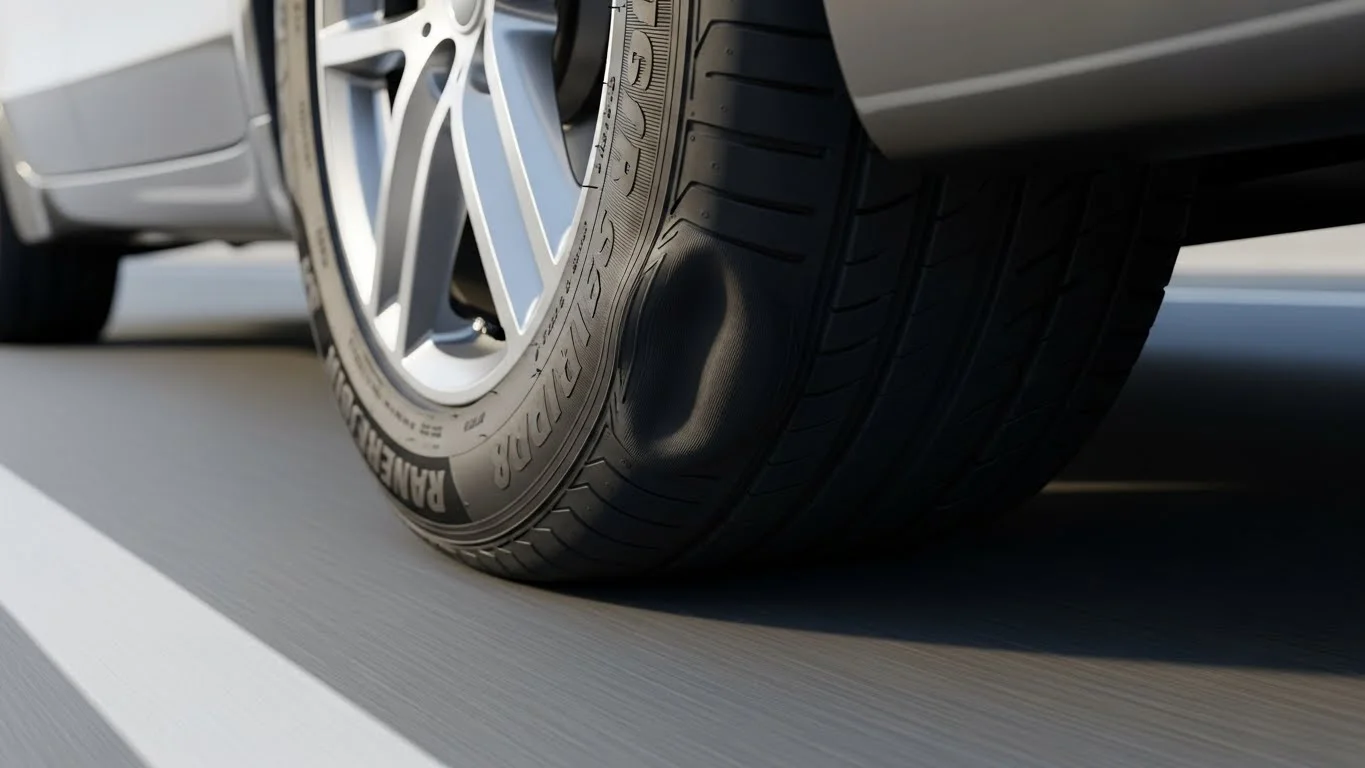
A tyre bulge is a visible deformation or bubble on the sidewall of a vehicle tyre. While it may appear minor at first glance, it is a sign of internal tyre damage that can pose serious risks. Tyre bulges occur when the structural integrity of the tyre is compromised, often due to impact, overinflation, or overloading. Recognizing a tyre bulge early can prevent accidents and ensure your safety on the road.
Drivers should understand that a tyre bulge is not just a cosmetic problem. It indicates that the tyre is weakened and may fail without warning. It is important to inspect your tyres regularly and take immediate action if you notice any unusual bumps or sidewall deformities.
Causes of Tyre Bulges
Understanding the reasons behind tyre bulges is essential for prevention. The most common causes include:
-
Impact Damage
Hitting potholes, kerbs, or road debris can cause the tyre’s internal cords to break. This leads to a bubble forming on the sidewall. Even minor impacts can result in long-term tyre damage. -
Overinflation or Underinflation
Incorrect tyre pressure can stress the tyre structure. Overinflated tyres are more prone to sudden blowouts, while underinflated tyres can cause overheating and bulging. Regular pressure checks help prevent these issues. -
Overloading
Carrying loads that exceed the tyre’s recommended weight capacity puts excessive pressure on the tyre walls. This can weaken the sidewall and eventually lead to a tyre bulge. -
Manufacturing Defects
Although rare, some tyres may develop bulges due to flaws in the production process. These defects often appear within the first few months of use. -
Age and Wear
Tyres deteriorate over time, and worn tyres are more susceptible to bulging. Sidewall cracks, uneven wear, or long-term exposure to heat can compromise tyre strength.
By understanding these causes, drivers can take preventive measures and reduce the risk of tyre bulges.
How to Spot a Tyre Bulge
Spotting a tyre bulge early is crucial for safety. Here are some key signs to look for:
-
Visual Inspection
Check your tyre sidewalls for any bumps, bubbles, or unusual deformities. Inspect all four tyres carefully and note any irregularities. -
Driving Symptoms
A tyre bulge can cause vibrations, thumping noises, or pulling to one side while driving. These signs indicate that the tyre’s structure is compromised and needs attention immediately.

-
Regular Checks
Incorporate tyre inspections into your routine vehicle maintenance. Look for signs of wear and damage, and monitor tyre pressure regularly.
Early detection allows drivers to replace damaged tyres before they fail, ensuring safe driving conditions.
Risks of Driving with a Tyre Bulge
Driving on a tyre with a bulge is extremely dangerous. The risks include:
-
Sudden Blowouts
The weakened area of the tyre can burst under normal driving conditions. A blowout at high speed may cause loss of control and serious accidents. -
Loss of Vehicle Control
Even small bulges can affect the handling of your vehicle. Steering may become unpredictable, especially during emergency maneuvers. -
Increased Accident Risk
A tyre failure can lead to collisions, putting the driver, passengers, and other road users in danger. -
Legal and Insurance Implications
Driving with a damaged tyre may affect your insurance coverage in case of an accident. Additionally, it may fail a vehicle safety inspection.
Safety experts advise against continuing to drive on tyres with bulges. Replacing the tyre is the only reliable solution.
Can a Tyre Bulge Be Repaired?
Many drivers wonder whether a tyre bulge can be fixed. Unfortunately, repairing a tyre bulge is not safe. The internal cords and structure of the tyre are compromised, making it prone to sudden failure. Professional mechanics recommend immediate replacement of any tyre with a bulge. Attempting a DIY repair or using patch solutions can put you at significant risk. Replacing the tyre ensures road safety and peace of mind.
Preventing Tyre Bulges
While some causes, like manufacturing defects, are unavoidable, there are steps drivers can take to prevent tyre bulges:
-
Maintain Proper Tyre Pressure
Check your tyres regularly and keep them inflated to the manufacturer’s recommended levels. -
Avoid Rough Roads
Drive carefully on potholes and uneven surfaces. Sudden impacts can damage tyre walls. -
Load Your Vehicle Safely
Do not exceed the tyre’s maximum weight capacity. Spread heavy loads evenly to reduce stress on tyres. -
Regular Inspections
Inspect your tyres for cracks, uneven wear, and deformities. Replace old or worn tyres promptly.
By following these preventive measures, you can reduce the likelihood of tyre bulges and improve your overall driving safety.
Tyre Bulge vs Other Tyre Issues
Not all tyre problems are bulges. It is important to differentiate:
-
Bulge vs Bubble
A bubble usually refers to a similar deformation, but it may occur due to air pockets in the tyre. Both require replacement. -
Bulge vs Crack
Cracks appear as lines on the tyre surface and may indicate ageing or sun damage. Bulges are more dangerous because they compromise structural integrity. -
Bulge vs Tread Wear
Uneven tread wear affects grip but does not always indicate immediate danger. Bulges are urgent issues that cannot be ignored.
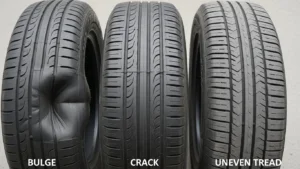
Understanding these differences helps drivers make better maintenance decisions and avoid accidents.
Emergency Steps if You Find a Bulge
If you notice a tyre bulge while driving:
-
Do Not Ignore It
Stop driving as soon as it is safe to do so. Continued driving may cause a blowout. -
Use a Spare Tyre or Tow
Replace the tyre with a spare if available or call for roadside assistance. -
Seek Professional Help
Take your vehicle to a certified mechanic to replace the damaged tyre. Ensure all other tyres are inspected for potential issues.
Following these steps can prevent accidents and ensure your vehicle remains safe to operate.
FAQs
What causes a tyre bulge?
Tyre bulges are caused by impact damage, overinflation, underinflation, overloading, manufacturing defects, and tyre age.
Can I drive on a tyre with a bulge?
It is unsafe to drive on a tyre with a bulge. Replace it immediately to avoid accidents.
How much does it cost to replace a bulged tyre?
Replacement costs vary depending on the tyre brand and size. Investing in a quality tyre ensures safety and longevity.
How can tyre bulges be prevented?
Maintain tyre pressure, avoid rough roads, distribute loads evenly, and inspect tyres regularly.
Conclusion
A tyre bulge is a serious safety concern that should never be ignored. Understanding its causes, spotting warning signs, and taking immediate action are essential for protecting yourself and your passengers. Regular maintenance, careful driving, and timely tyre replacement are the best ways to avoid the risks associated with tyre bulges. Stay vigilant and keep your tyres safe to ensure a smooth and secure driving experience.